

Renishaw
Lead Embedded Software Engineer
Lead Embedded Software Engineer
Posted 3 weeks ago
Wotton-under-EdgePermanentHybridFull-TimeLead
£60,000 - £ 60,000 Posted 3 weeks ago
Description
Lead Embedded Software Engineer
Wotton under Edge / Hybrid (3 days office based)
Salary: up to £60,000 depending on experience
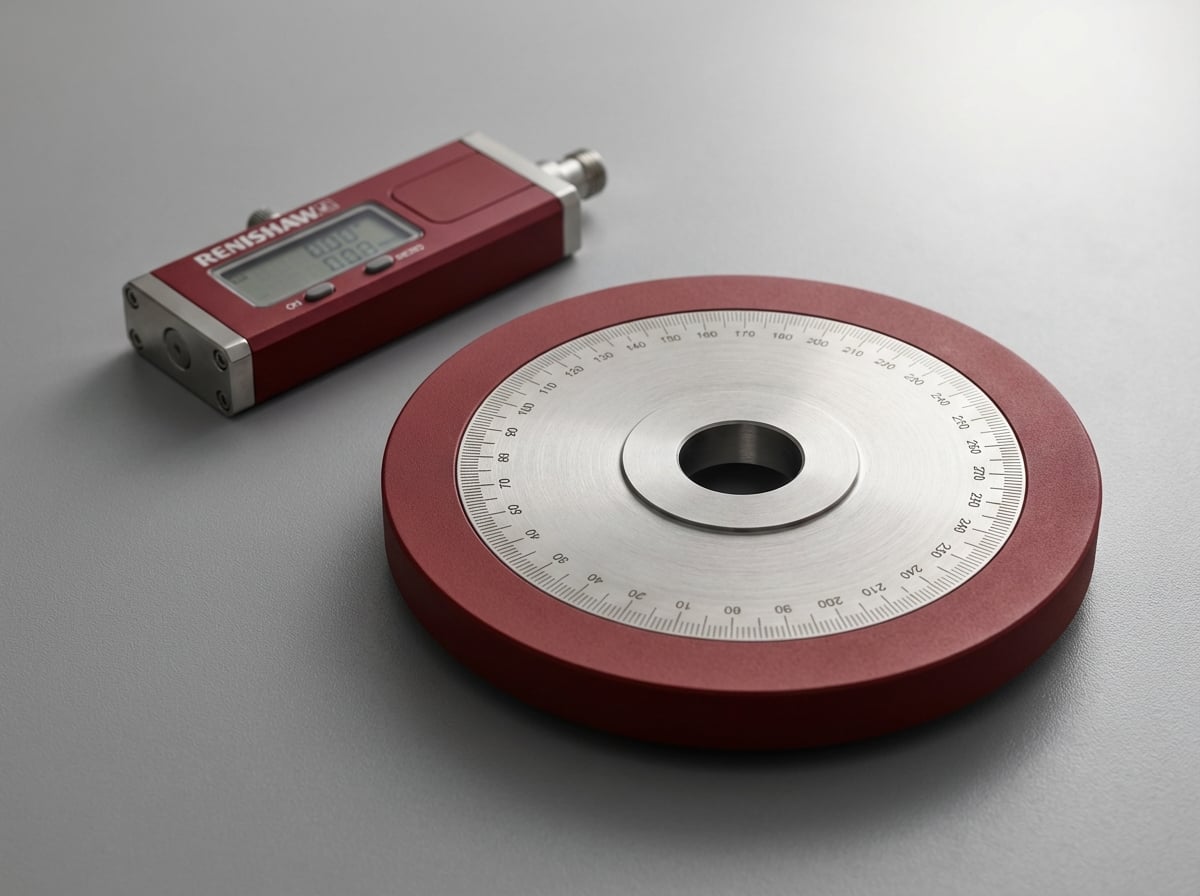
Renishaw’s Encoder Products Division (EPD) designs and supplies cutting-edge position feedback technology to the world’s precision measurement, automation, and manufacturing industries. It is highly likely that something you own contains a part or device that was manufactured with the help of one of Renishaw’s encoder products.
EPD is made up of engineers, scientists and technicians all working together to produce market leading products for sale around the world. We start with cutting edge optical, algorithm and circuit design, developing our own ASICs and sensors where required; we then use innovative mechanical engineering to turn our core technology into a range of desirable products for our broad customer base.
Working closely with colleagues in our manufacturing division, we develop manufacturing and assembly processes and software to deliver quality products by the hundreds of thousands that in turn, perform reliably and repeatedly to sub-micron accuracies for our customers.
We’re looking for a Lead Embedded Software Engineer to take technical ownership of the firmware in our high-performance sensor and encoder products. This is a hands-on role combining architecture and delivery leadership with day-to-day embedded development, debugging, and verification on real hardware.
Our systems are typically bare-metal and real-time, and in some products the MCU works alongside an FPGA (either as a co-processor to the FPGA or with the FPGA as a co-processor to the MCU). For certain product lines, you will also contribute to development practices and evidence that support functional safety certification.
You’ll work closely with systems, electronics, algorithms, FPGA/RTL, and test team - and you’ll play a key role in mentoring graduates and apprentices, helping the team deliver reliably while developing capability.
Key responsibilities
Essential requirements
Desirable requirements
Benefits
At Renishaw we believe that our success is powered by welcoming a workforce of diverse and talented people. Through encouraging an inclusive culture, where all our employees are free to be themselves, we can achieve our core values: Innovation, Inspiration, Integrity, and Involvement.
Wotton under Edge / Hybrid (3 days office based)
Salary: up to £60,000 depending on experience
Renishaw’s Encoder Products Division (EPD) designs and supplies cutting-edge position feedback technology to the world’s precision measurement, automation, and manufacturing industries. It is highly likely that something you own contains a part or device that was manufactured with the help of one of Renishaw’s encoder products.
EPD is made up of engineers, scientists and technicians all working together to produce market leading products for sale around the world. We start with cutting edge optical, algorithm and circuit design, developing our own ASICs and sensors where required; we then use innovative mechanical engineering to turn our core technology into a range of desirable products for our broad customer base.
Working closely with colleagues in our manufacturing division, we develop manufacturing and assembly processes and software to deliver quality products by the hundreds of thousands that in turn, perform reliably and repeatedly to sub-micron accuracies for our customers.
We’re looking for a Lead Embedded Software Engineer to take technical ownership of the firmware in our high-performance sensor and encoder products. This is a hands-on role combining architecture and delivery leadership with day-to-day embedded development, debugging, and verification on real hardware.
Our systems are typically bare-metal and real-time, and in some products the MCU works alongside an FPGA (either as a co-processor to the FPGA or with the FPGA as a co-processor to the MCU). For certain product lines, you will also contribute to development practices and evidence that support functional safety certification.
You’ll work closely with systems, electronics, algorithms, FPGA/RTL, and test team - and you’ll play a key role in mentoring graduates and apprentices, helping the team deliver reliably while developing capability.
Key responsibilities
- Lead and deliver hands-on embedded firmware development for real-time, bare-metal MCU-based products from early prototypes through to production and long-term support.
- Own and develop firmware architecture and design, including timing strategy, interrupt design, resource/memory budgets, interface definitions, test strategy approach, and maintainability over the product lifecycle.
- Develop and maintain firmware that interfaces effectively with FPGA-based subsystems, collaborating with FPGA/RTL teams on partitioning, interfaces, timing, data movement, and validation of MCU–FPGA interactions.
- Drive capture, refinement, and traceability of requirements, working closely with systems, electronics, algorithms, FPGA/RTL, and test teams - translating high-level user expectations into implementable firmware requirements and verifiable behaviour.
- Understand, evaluate, and implement embedded algorithms on MCU targets with a focus on performance, accuracy, determinism, numerical robustness, and repeatable behaviour.
- Optimise for power, performance, and determinism, applying power-aware design techniques (sleep states, peripheral gating, DMA strategies, interrupt minimisation, timing/throughput trade-offs) to reduce system consumption without sacrificing performance.
- Set engineering direction and maintain high standards through design reviews, code reviews, coding standards, and pragmatic best practice adoption.
- Define verification and validation strategy across unit, integration, and system-level testing (including testability hooks, diagnostics, and hardware-in-the-loop approaches where appropriate).
- Support functional safety certification where required, contributing to safety lifecycle activities such as safety requirements, design constraints, traceability, verification planning, and producing audit-quality evidence.
- Produce and maintain clear documentation: architecture, interfaces, design rationale, timing/power budgets, verification approach, and support notes suitable for long-term product maintenance.
- Mentor and support engineers, especially graduates/apprentices: create well-scoped work packages, provide guidance and review, and help maintain delivery momentum despite high junior-engineer rotation.
Essential requirements
- Strong, demonstrable experience in modern C for embedded systems.
- Proven experience designing and maintaining embedded firmware architectures for MCU-based products.
- In-depth understanding of ARM microcontroller architectures (e.g., Cortex‑M), including interrupts/exceptions/DMA, memory systems, timers, and common peripherals.
- Solid experience with bare-metal real-time firmware development and debugging on real hardware.
- Practical experience building reliable firmware around serial/low-level communications protocols (e.g., SPI, I²C, UART, CAN/RS‑485, or similar) and diagnosing hardware/firmware integration issues.
- Experience with build systems and developer tooling, including CMake (or equivalent) and maintaining clean, reproducible builds.
- Experience writing and maintaining unit tests (embedded or host-based) and designing code for testability.
- Demonstrable ability to design for power in embedded systems: understanding low-power modes, peripheral management, timing/power trade-offs, and measurement-driven optimisation.
- Strong grasp of software quality principles: readability, maintainability, robustness, traceability, and testability.
- Clear written and verbal communication, able to align teams around interfaces, requirements, and design trade-offs.
- Degree in engineering/computer science (or equivalent practical experience).
Desirable requirements
- Experience working on products where an FPGA is part of the system, including MCU–FPGA interface definition, data movement, timing/latency analysis, and collaborative debug.
- Familiarity with functional safety development (IEC61508 and ISO13849) and/or supporting products through certification.
- Knowledge of coding standards and safety-oriented development practices (e.g., MISRA C/C++, static analysis, code coverage, defensive programming).
- Experience with secure development practices in embedded systems.
- Experience with Git-based workflows and issue/change management tools (e.g., Azure DevOps).
- Experience with automated CI build/test pipelines for embedded firmware.
- Understanding of DSP, fixed-point arithmetic, numerical methods, or similar techniques relevant to sensor systems.
- Background in electronic engineering or strong lab skills: schematics familiarity, test strategy, instrumentation, and systematic fault isolation.
Benefits
- 9% non-contributory pension.
- Discretionary annual bonus.
- Subsidised onsite restaurants and coffee shops.
- Free parking and car sharing scheme.
- 24 hour fitness centres.
- Hybrid working policy (3 days office based).
- 25 days holiday plus bank holidays.
- Life Assurance policy of 12 times annual salary.
- Cycle to Work scheme and Health Cash Plan.
At Renishaw we believe that our success is powered by welcoming a workforce of diverse and talented people. Through encouraging an inclusive culture, where all our employees are free to be themselves, we can achieve our core values: Innovation, Inspiration, Integrity, and Involvement.
Renishaw
A global engineering company delivering precision measurement and healthcare technologies
Wotton-under-EdgeMedical Devices1000+
Renishaw
Engineers develop measurement and healthcare systems used in aerospace, automotive and surgical settings worldwide. You will solve precision challenges and create technologies that improve manufacturing quality and patient care