
Health and Life Sciences Jobs You Can Move into Without Coding Experience
Explore roles across health and life sciences that require no coding, from product and design to operations, clinical, regulatory and customer success, and discover how your skills can shine.

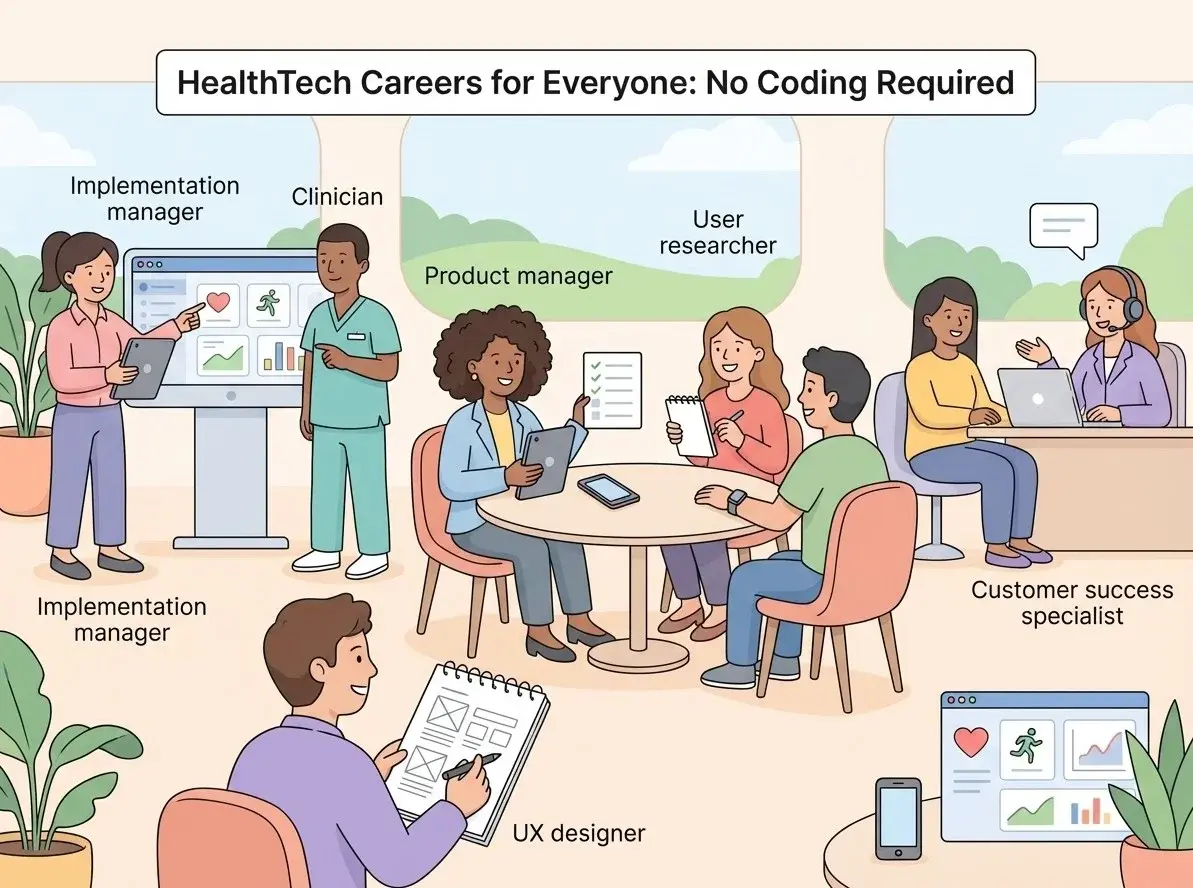
One of the biggest misconceptions I hear from people exploring health and life sciences is the idea that you must know how to code to break into the sector. I want to be very clear about this. You absolutely do not.
This sector thrives on a mix of skills, backgrounds and perspectives. In fact, many of the roles making the biggest impact today, across digital health, medical devices, diagnostics, pharma and the CROs that support them, do not require any coding at all. If you care about improving healthcare, solving meaningful problems and working in a purpose driven environment, there is space for you here.
This guide will walk you through the roles you can move into without touching a single line of code, and how your existing strengths might be far more valuable than you realise.
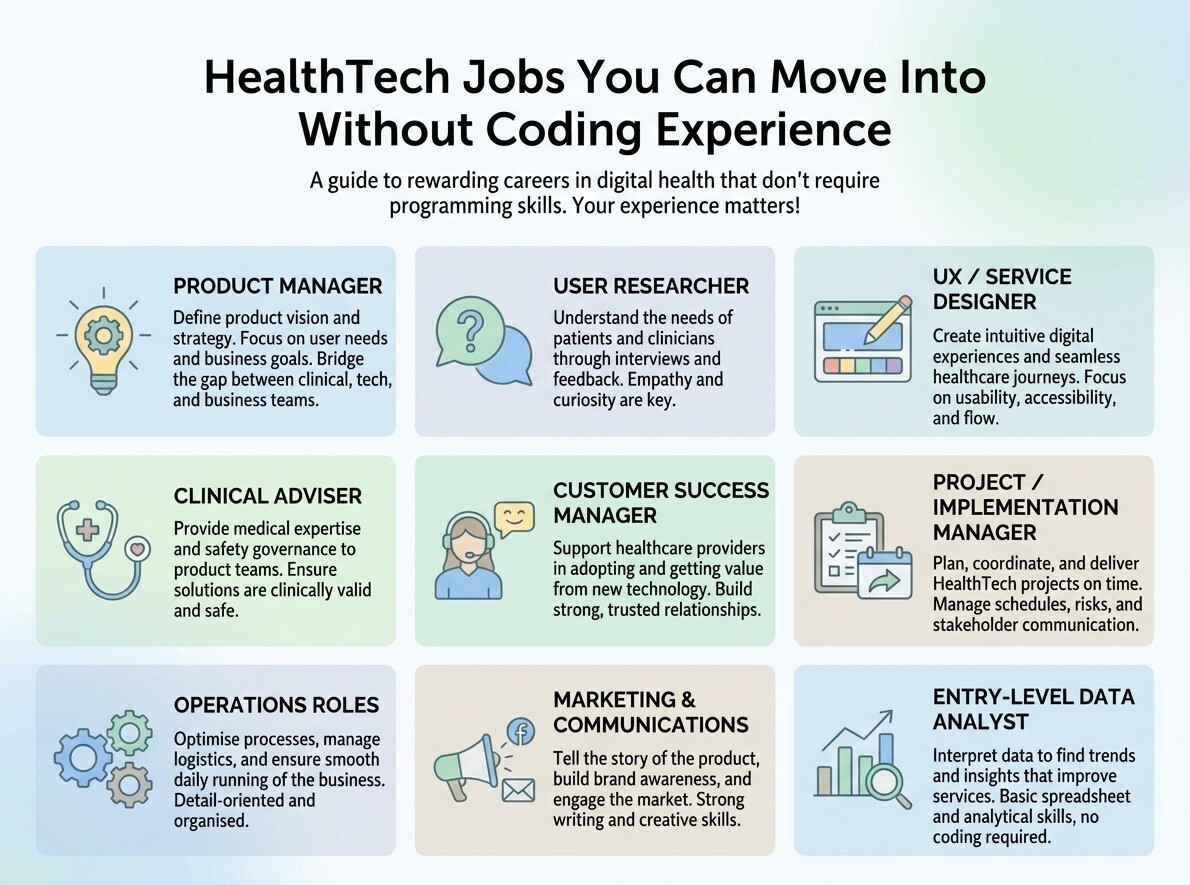
Product Manager
Product managers sit at the heart of digital health and device companies. They help shape the direction of a product, understand user needs, prioritise features and make sure the team is solving the right problems.
You do not need to be technical. You need to be curious, organised and able to think from the perspective of both the user and the business. If you enjoy problem solving, asking thoughtful questions and bringing clarity to complex situations, product management could be a natural fit for you.
User Researcher
If you enjoy speaking to people, identifying pain points and uncovering insights, user research is a brilliant route in. User researchers work with clinicians, patients, administrators and carers to understand what they need from the tools they use.
This job is perfect for someone who is empathetic, analytical and patient centred. Your goal is simple. Help the team build products that genuinely work for the people using them.
UX or Service Designer
A UX designer focuses on how a digital product feels to use, while a service designer looks at the full end to end journey. Neither requires coding knowledge. What you do need is an eye for detail, creativity and a strong desire to improve the user experience.
This is an ideal role if you have a background in design, psychology, customer support or anything that involves understanding people and simplifying complex processes.
Project or Implementation Manager
Implementation managers help bring products into real world settings. This could mean working with hospitals, care providers, private clinics or diagnostic labs. You coordinate timelines, train staff, gather feedback and make sure the product is successfully adopted.
It is an excellent role for strong communicators and organised thinkers. If you enjoy seeing ideas become reality and working closely with users, this is a fulfilling path with plenty of career progression.
Customer Success Manager
Customer success roles are perfect for people who are relationship driven, supportive and great at communication. Your job is to help customers get the most value out of the product. Your customers might be clinicians, practice managers, care teams or patients.
If you can build trust, offer guidance and solve problems calmly, you will be incredibly valuable in this role.
Clinical Specialist or Clinical Advisor
If you have a clinical background but want to step away from traditional care, the sector has many roles that allow you to use your expertise in a new way. Clinical specialists bridge the gap between clinical teams and product, evidence or commercial teams. They help ensure products are safe, effective and aligned with real life pathways.
This route is ideal for nurses, doctors, paramedics, pharmacists or allied health professionals who want a fresh challenge without leaving healthcare entirely.
Clinical Operations and Medical Affairs
Pharma, biotech, diagnostics and CRO employers run large clinical and medical functions that have nothing to do with code. Clinical operations roles keep trials on track: managing sites, monitoring data quality and coordinating timelines. Medical affairs roles sit between the science and the people who use it, answering clinical questions and shaping how evidence is communicated.
If you are organised, detail driven and comfortable with clinical language, these are strong, durable career paths.
Operations Manager
Operations roles keep companies running smoothly. You might handle internal processes, coordinate teams, shape strategy or support product launches.
This job suits people who enjoy order, planning and problem solving. If you are the kind of person others rely on to make things run well, operations could be a strong next step.
Marketing or Growth Roles
Companies across the sector need people who can tell powerful stories, explain products clearly and connect with the right audiences. Marketing roles can involve content creation, brand building, social media, campaign planning and more.
If you have strengths in communication, creativity or strategy, this route works very well, and it does not require coding knowledge.
Regulatory or Quality Roles
Health and life sciences products must follow clear standards to keep people safe. Regulatory and quality professionals help companies meet these requirements across devices, diagnostics and medicines. This path suits people who enjoy detail, structure and risk management.
There is strong demand here, particularly as more companies build AI driven products that need additional governance.
Why Your Non Technical Skills Are Your Superpower
Companies in this sector are not just looking for technical talent. They are looking for:
- empathy
- communication
- problem solving
- creativity
- organisation
- leadership
- curiosity
- collaboration
These are the skills that help products succeed in the real world. Coding builds the product. Human insight makes it valuable.
If you have strengths in any of these areas, you already have the foundations for a successful career across health and life sciences.
Conclusion
You do not need to be a developer to enter this sector. There are countless roles where your existing experience can shine, and many teams are looking for people exactly like you. If you want to contribute to meaningful change, work with purpose driven teams and help shape the future of healthcare, this is one of the most rewarding sectors you can join.
Look at your strengths. Look at your story. You may already be far closer to a career here than you think.