
How to turn a clinical CV into an industry CV
What an industry hiring manager does with your CV in eight seconds, and how to rewrite an NHS CV so it gets shortlisted.

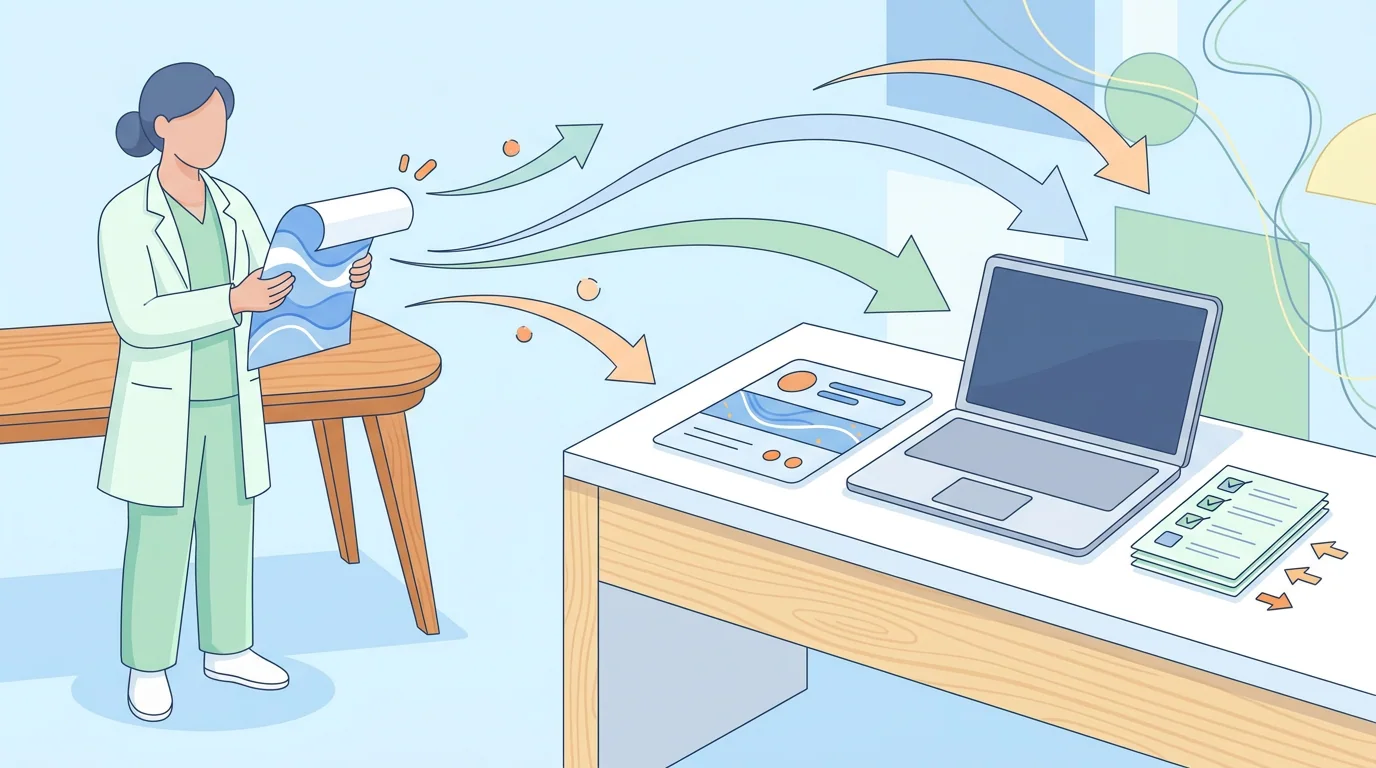
An industry hiring manager gives your CV about eight seconds, and a clinical, appraisal-style CV rarely survives them.
What a hiring manager actually does in eight seconds
I have read thousands of CVs from the hiring side. At Spotify, Wayfair and DAZN, then every day through Meeveem in UK health and life sciences. Here is the honest bit. I do not read your CV first. I scan it.
Top third first. Who are you, what have you run, what are you moving toward. If those three things do not land fast, the rest goes unread. That is not laziness. The reader has forty other CVs open, a role that was due yesterday, and roughly eight seconds of attention for yours before the next one loads.
A clinical CV loses me here almost every time. Not because the clinician is weak. Because the CV answers a different reader.
The move out of the NHS is a big decision, and I cover the whole of it in leaving the NHS for industry. This guide is the narrow, practical part: the CV.
Why clinical CVs fail in industry
The NHS trains you to write for appraisal. Duties, competencies, mandatory training, revalidation dates. It is a compliance document. It proves you did the job to standard.
A hiring manager wants the opposite. Not the tasks on your job plan. What changed because you were there.
That is why the classic clinical CV opens with all the wrong things: a PIN or GMC number in the header, your full home address, mandatory training listed line by line, references sitting on page one, then two full pages of duties that read like a job description someone handed you rather than a job you shaped. None of that tells me whether to shortlist you. Worse, it buries the parts that would.
The three moves that fix it
Three translations do most of the work.
Duties into outcomes. Stop listing what you were responsible for. Name what moved. The delay you cut. The protocol you rewrote. The incident you caught before it reached a patient.
Clinical grade into scope. A hiring manager outside the NHS does not know what a Band 7 is, or a registrar. They understand scope. How many people, how many beds, how big a budget, how hard the decisions. Translate the grade into the size of the thing you carried. What that scope is worth in money is its own question, and I break it down in the NHS versus industry pay guide.
Clinical achievements into transferable evidence. The audit becomes project delivery. The teaching becomes leadership. The near-miss you caught becomes risk management. Same story, in language the reader already values. There is a fuller version of this in seven clinical skills that scale into corporate roles.
Before and after: three quick rewrites
These are illustrative. The numbers are examples, not real placements. Put your own real figures in. Do not borrow mine.
Nurse Before: "Responsible for the day-to-day running of a surgical ward. Duties included medication administration, care planning and student mentoring." After: "Ran a 28-bed surgical ward and a team of 15 across three shifts. Redesigned the discharge process and cut delays by [your figure]. Trained 20 new starters in two years."
Doctor Before: "Registrar in acute medicine. Responsible for ward rounds, on-call cover and audit." After: "Senior decision-maker on the acute take overnight, admitting and escalating without a consultant on site. Led an audit that changed [the protocol you changed] across the department."
Pharmacist Before: "Band 7 clinical pharmacist. Responsible for medicines optimisation and MDT input." After: "Owned medicines safety across two wards. Cut [the error type you reduced] by [your figure] and wrote the guidance the team still uses."
See the pattern. The before proves you turned up. The after proves you made a difference.
The three-line profile at the top
Every industry CV needs a short profile at the top. Three lines, no more. It is the eight-second scan, written out so I do not have to hunt.
Line one: who you are and your domain. Line two: the scope you have carried. Line three: what you are moving toward, with the proof. Plain sentences. No mission statement. No "passionate, dedicated professional". Say the true thing simply.
What to cut
Cut hard.
Most clinical CVs lose a page the moment you delete the wrong-audience material:
- The mandatory training list. Nobody in industry reads it.
- Your full home address. A city and "open to relocation" is plenty.
- "References available on request." Assumed. Delete it.
- PIN, GMC or registration numbers, and revalidation dates. Not for page one.
- The two-page duty dump. Keep the outcomes, bin the job description.
- Date of birth, marital status, a photo. Old habits, cut them all.
Formatting for a human and a machine
Your CV has two readers. A person, and the software that files it before the person ever sees it.
Keep it plain. Standard headings: Profile, Experience, Skills, Education. One to two pages. A clean Word document or a simple PDF. No columns, no text boxes, no logos in the header. The applicant tracking system chokes on those and drops half your CV on the floor.
Then the keywords. Read the advert twice. Notice the exact words it repeats, and write them back in your own lines: clinical safety, protocol, stakeholder, regulatory, whichever ones are true of you. Not a keyword block stuffed at the bottom of the page. Real words, in real sentences, taken straight from the advert you are answering. The applicant tracking system matches on those words. The hiring manager reads for them too. Miss them and a strong CV can sink before a human ever opens it.
This is roughly what Meeveem's CV tool does from the other side. You upload your CV, it reads it against live roles the way a specialist recruiter would, then shows you which ones fit and where the gaps sit. You can do the same by hand. Either way, tailor the CV to the role and never send one generic version.
Where you point all this depends on the job. A clinical research associate advert rewards trial and protocol language. A medical science liaison advert rewards the way you explain evidence to people who disagree. The roles clinicians move into, mapped to what you liked about the work, sit in the roles by background guide.
FAQ
One page or two?
Two is fine, if the second page earns its place. Lead with scope and outcomes. History comes second. A registrar with ten years has more to say than a foundation doctor, and that is allowed. The test is not length. It is whether every line helps me shortlist you.
Should I put my clinical band or grade on it?
Translate it first, then add it in brackets if it helps. "Led a team of 15 (Band 7)" works. "Band 7 Nurse" as your headline does not, because the reader outside the NHS cannot price it.
How do I explain a career gap?
One plain line, no apology. "Career break, 2023 to 2024" or "Less than full time during training". Hiring managers see gaps every day. A calm one-line explanation closes the question. Silence and vague dates open it.
Should I use a fancy template?
No. The designed two-column template with icons is often the reason your CV arrives scrambled. Plain beats pretty here. Save the effort for the words.
Your clinical years already hold the evidence a hiring manager wants. Translate it one line at a time, then point the CV at real openings on the jobs board and shape it to each advert.