
Pharmacy technician career path: what it takes, what it pays, where it leads
A practical guide to becoming a pharmacy technician in the UK, covering qualifications, registration, salary, and the routes beyond.

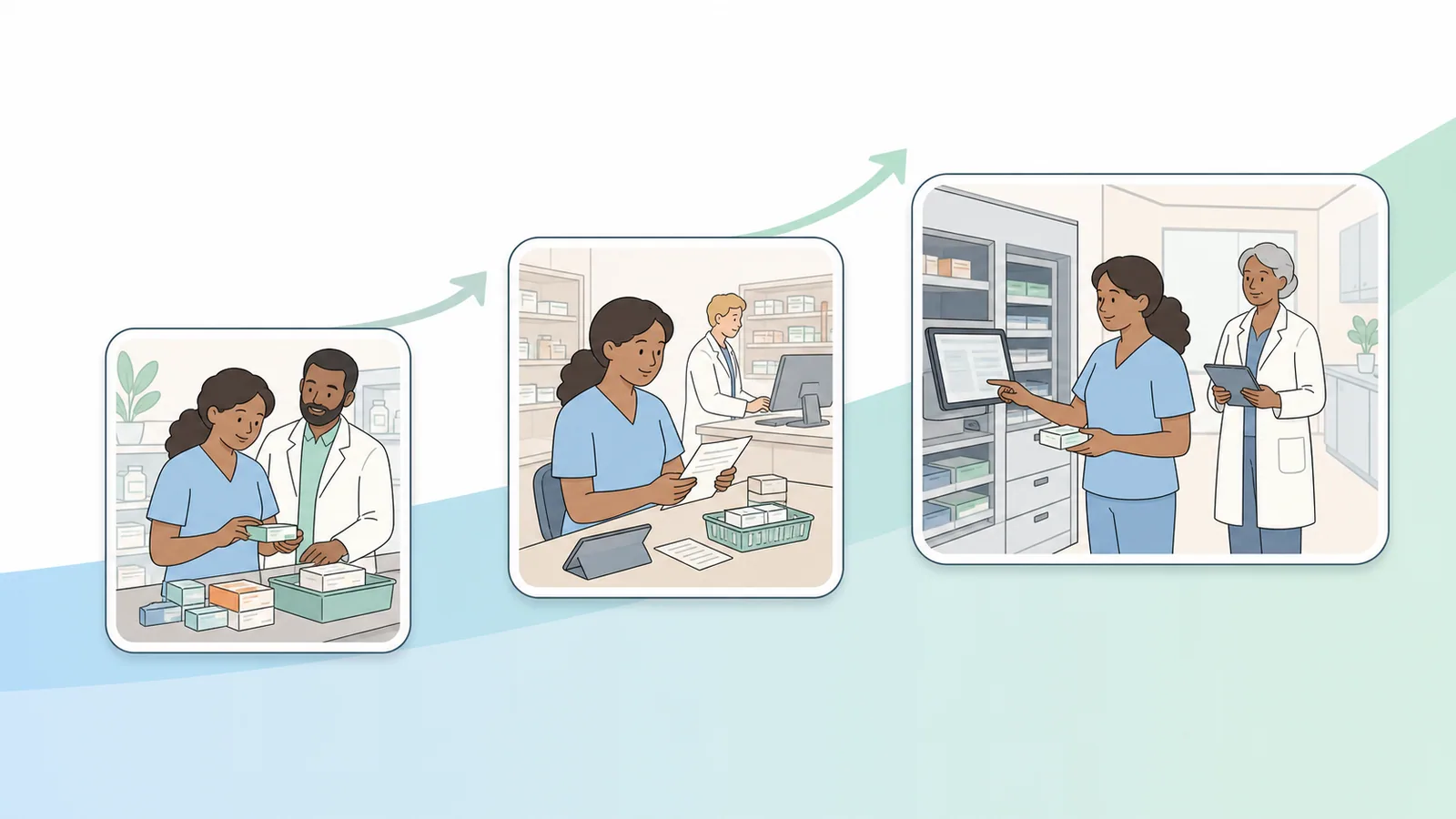
A practical guide to becoming a pharmacy technician in the UK, covering qualifications, registration, salary, and the routes beyond.
If you are thinking about pharmacy but four years at university feels like too much, this role deserves a closer look. Pharmacy technicians work alongside pharmacists, handling much of the operational and patient-facing work that keeps a pharmacy running, from dispensing medicines to counselling patients on how to take them safely. Training is shorter. Entry routes are more flexible. The career has room to grow.
I see pharmacy technician roles come through Meeveem regularly, in NHS hospitals, community pharmacies, and industry. Here is what the path looks like.
What a pharmacy technician does
The short version: a pharmacist makes clinical decisions about medicines. A pharmacy technician prepares, dispenses, and checks medicines, and supports patients in using them safely. The overlap is real. The accountability sits in different places.
On a hospital ward, a pharmacy technician might take medication histories from newly admitted patients, check stock levels, prepare IV medicines, and counsel patients on discharge. Community pharmacy is different. The role centres on dispensing prescriptions, advising customers on over-the-counter products, and managing repeat prescription services. Same title. Different days.
The work is detail-heavy. A misread label or a missed interaction can cause real harm. If that kind of precision suits you, the role fits. If it sounds like stress, think carefully. Know yourself.
Routes in: apprenticeship, college, or accredited course
There is no single path. Three routes lead to registration, and all end at the same place.
Level 3 pharmacy technician apprenticeship. This is the most common route for people starting fresh. You work in a pharmacy while studying, typically over two years. Employers include NHS trusts, Boots, Lloyds, and independent pharmacies. You earn while you learn. The qualification leads directly to registration.
BTEC or NVQ. Some colleges offer Level 3 diplomas in pharmaceutical science or pharmacy services. These require work placements alongside study. Prefer classroom learning first? This route suits you.
Accredited courses. Several universities and private providers offer intensive courses, often aimed at career changers or graduates. Costs more. Faster.
Whichever route you take, the outcome is the same: a qualification recognised by the General Pharmaceutical Council.
GPhC registration
You cannot call yourself a pharmacy technician without registering with the GPhC. This is law.
Registration requires a Level 3 qualification and evidence of competence in practice, which you demonstrate through assessments during training and a portfolio of evidence that documents what you can do. Fee. Check. Then renew annually and complete continuing professional development, or the GPhC removes you from the register and you cannot practise.
The GPhC maintains a public register. Employers check it. Working without registration is a criminal offence.
NHS pay: what the bands actually mean
Pharmacy technicians in the NHS sit on Agenda for Change, usually starting at Band 4 and progressing to Band 5 with experience or specialisation.
Band 4 (entry level): £26,928 to £29,551 per year in England as of April 2026. Most newly qualified technicians start here. The range reflects incremental progression within the band.
Band 5 (senior or specialist): £32,073 to £39,043 per year. You reach this by taking on additional responsibilities. Accuracy checking. Medicines optimisation. Supervisory duties.
High-cost area supplements apply in London and surrounding areas. Inner London adds around 20% to basic salary. Use the NHS Pay Calculator to see exact figures for your location. Numbers matter. Get them right.
Part-time and flexible working are common, which makes the role appealing to people with caring responsibilities or other commitments outside of work. Flexibility exists.
Community and industry pay
Outside the NHS, pay varies. Widely.
Community pharmacy chains like Boots and Lloyds typically pay in line with NHS Band 4 or slightly below for entry roles. Independents vary wildly, from basic minimum wage to noticeably above NHS rates depending on where you live and whether the owner values retention. Ask.
In industry, pharmacy technicians working in clinical trials, pharmaceutical manufacturing, or regulatory support can earn more than their NHS counterparts, especially once they have built experience in a specialist area. Entry roles often start around £28,000 to £32,000. Senior positions in quality assurance or clinical trial coordination can reach £40,000 or above. Ceilings are higher. Security is lower.
The trade-off is stability, and this is where you have to be honest with yourself about what you really value over the next five to ten years. Pension? NHS. Ceiling? Elsewhere.
Career progression: where pharmacy technicians go next
The role is not a dead end. Far from it. Several routes lead upward.
Accuracy checking technician. With additional training, you become qualified to perform the final accuracy check on dispensed prescriptions. Common first step. Clear progression.
Medicines optimisation. Some technicians move into roles that focus on improving how patients use their medicines, working with clinical pharmacists on ward rounds or in primary care networks. Rewarding work. Growing demand.
Clinical trials. Pharmacy technicians work in hospital trial units and for contract research organisations, managing investigational medicinal products and keeping the strict documentation that regulators require. Different pace. Interesting work.
Leadership and education. Senior technicians manage teams, train students, or move into professional body roles. The Chief Pharmacy Technician grade exists in many NHS trusts. Real authority. Real responsibility.
Transition to pharmacist. Yes, this is possible. A pharmacy technician can apply for the MPharm degree and train as a pharmacist. The technician experience counts in applications. Some universities offer credit for prior learning. It is a longer route. It is also a real one.
For more on pharmacist salaries, see the pharmacist salary guide. If you are weighing up apprenticeship routes, the pharmacist apprenticeship guide explains which ones actually exist.
Is this the right role for you?
The role suits people who value precision, enjoy patient contact, and want a healthcare career without years at university first. Not for everyone. It does not suit people who want full clinical autonomy or who find repetitive tasks draining.
Unsure which path fits? Compare the technician role with the pharmacist route in our NHS vs community pharmacist guide, which covers pay, workload, autonomy, and long-term progression in more detail than you will find anywhere else online.
See current openings on pharmacy technician jobs. Worth a look.
FAQ
How long does it take to become a pharmacy technician?
Two years is typical for the apprenticeship route, during which you work and study at the same time, earning from day one. College qualifications take similar length, plus placement time. Intensive courses can be shorter. They often cost several thousand pounds.
Do I need A-levels to become a pharmacy technician?
Most apprenticeships require GCSEs in English, maths, and science at grade 4 or above, which is the standard the General Pharmaceutical Council and most employers expect before you start training. A-levels? Not strictly required, though some competitive programmes prefer them. Mature applicants with relevant experience may be considered without formal qualifications.
Can a pharmacy technician prescribe?
No. Prescribing authority sits with pharmacists who have completed additional training, and with certain other registered healthcare professionals. Pharmacy technicians dispense and advise. They do not prescribe.
What is the difference between a pharmacy assistant and a pharmacy technician?
A pharmacy assistant (or dispenser) works under supervision and does not need GPhC registration, which means the role carries less responsibility and lower pay than a technician position. A pharmacy technician is a registered professional with a protected title. Big difference.
Can I become a pharmacist after being a pharmacy technician?
Yes. The MPharm takes four years full-time, followed by a foundation year. Long road. Some universities offer credit for prior learning. The technician background helps. The how to become a pharmacist guide covers it.