
How AI is Changing HealthCare and the Jobs it Creates
Explore how AI is transforming UK healthcare, improving care delivery and creating new career paths across clinical, technical and operational roles in health and life sciences.

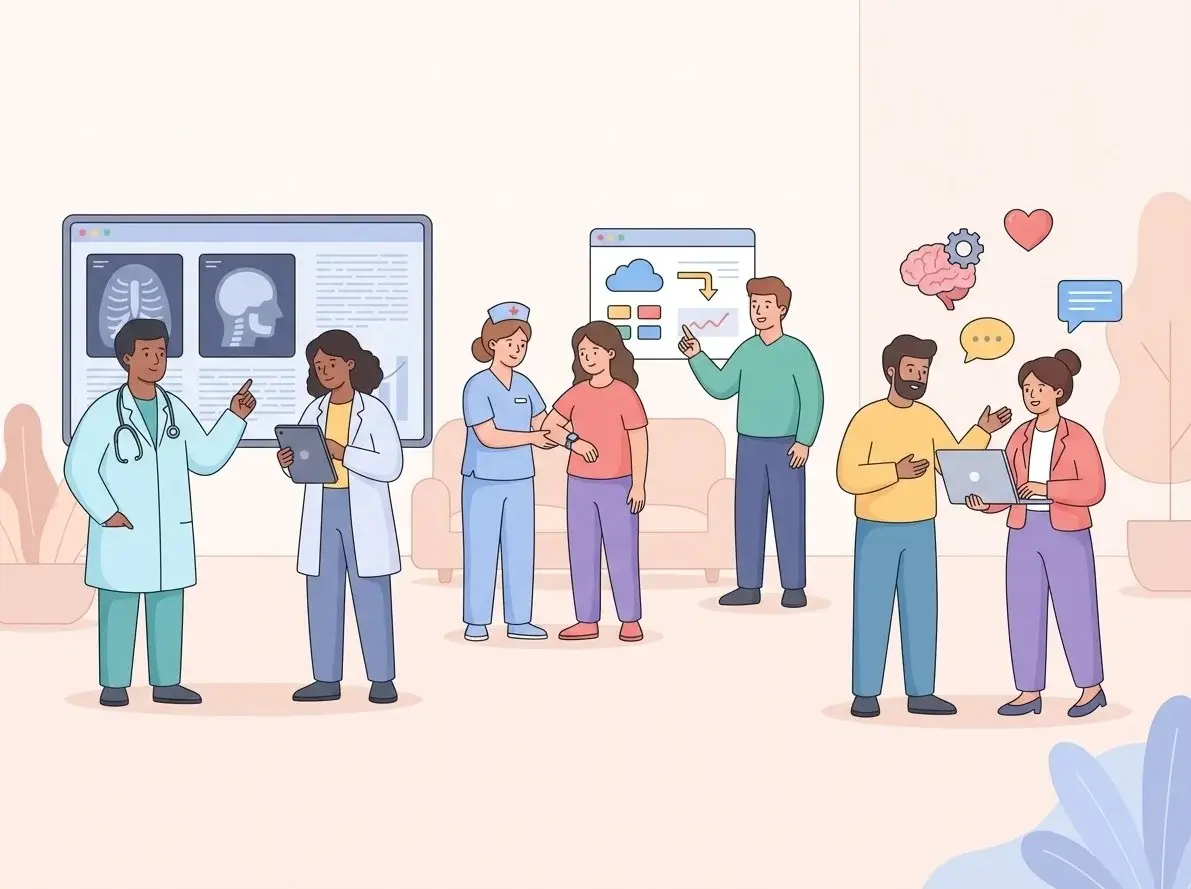
Artificial intelligence used to feel like something that belonged in science fiction, but it is now woven into the fabric of modern healthcare. What excites me most is that AI is not here to replace people. It is here to support them, elevate them and make care safer, faster and more personalised. The technology is evolving quickly, and so are the career opportunities around it, across digital health, medical devices, diagnostics, pharma and biotech. If you are thinking about a future in health and life sciences, understanding how AI is shaping the sector will give you a serious advantage.
Let us look at how AI is transforming healthcare across the UK, and more importantly, the new jobs and pathways that are emerging because of it.
AI is Transforming the Way We Deliver Care
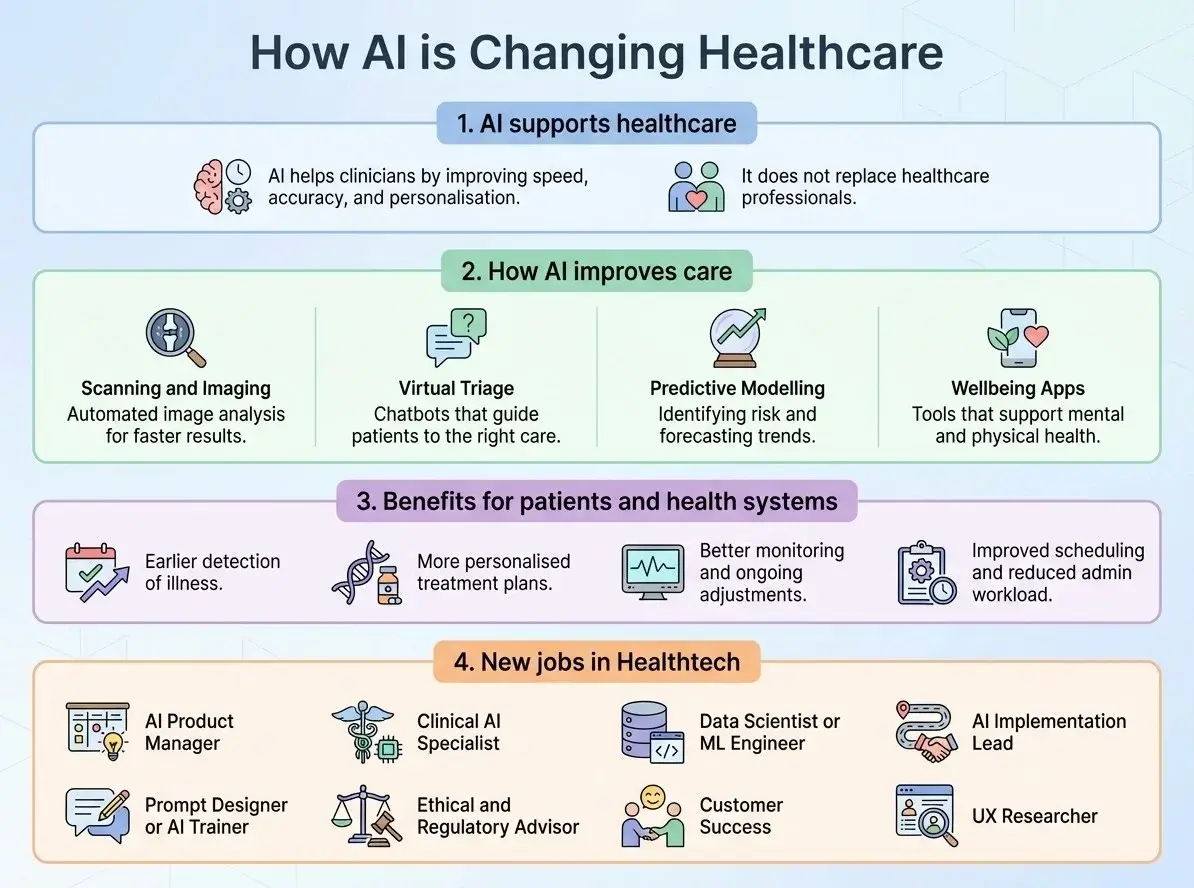
AI is already becoming a familiar part of the healthcare journey, even if we do not always notice it. It is behind the algorithms that help doctors read scans more quickly. It powers virtual triage tools that guide patients to the right service. It supports predictive models that help hospitals plan staff and resources. It even sits inside wellbeing apps that give personalised health recommendations.
What makes AI powerful in healthcare is its ability to process huge amounts of data and recognise patterns that humans might miss. This does not replace clinical judgement. Instead, it gives clinicians better information so they can make quicker and more confident decisions. When used well, AI helps shorten waiting times, reduce diagnostic errors and improve access to care.
In the UK, this change is happening across the NHS. From radiology departments trialling AI assisted imaging tools to GP practices using digital triage, the shift is already visible. The future of healthcare will be human centred, with AI working quietly in the background to support better outcomes for everyone.
AI is Improving Diagnosis and Early Detection
One of the most promising uses of AI is in diagnostics. AI systems can analyse scans, pathology slides or lab results at remarkable speed. In many cases, these tools act like a second pair of eyes, helping clinicians spot early signs of conditions such as cancer, heart disease or eye disorders.
This is particularly valuable for the NHS, where demand for imaging and diagnostic services can be incredibly high. By highlighting the cases that need urgent attention, AI systems help clinicians focus their time where it matters most. It is not about replacing radiologists or specialists. It is about giving them tools that make their work more accurate and less overwhelming.
AI is Creating Personalised Care
The next wave of AI in healthcare is deeply personalised. Imagine treatment plans tailored to the individual, not the average patient. AI makes this possible by examining patterns in lifestyle data, genetics, medical histories and real time health metrics from wearables.
This approach is already visible in digital health and diagnostics companies that offer personalised nutrition, medication support or behaviour change programmes, and in the pharma and biotech teams using AI to target therapies more precisely. Patients feel more understood and more supported. Clinicians can monitor progress remotely and intervene earlier.
This shift creates a new type of healthcare experience. It becomes more proactive, more continuous and more responsive for patients.
AI is Improving NHS Operations Behind the Scenes
AI is not only used in clinical care. It is increasingly supporting the operational side of the NHS. Predictive tools can forecast patient flow, helping hospitals avoid overcrowding. Scheduling algorithms can optimise theatre lists. Digital systems can reduce administrative tasks that often take staff away from patient care.
When we talk about AI in healthcare, it is easy to focus on high tech clinical tools. Yet some of the biggest wins come from improving everyday workflows. These improvements free up time and reduce burnout for healthcare staff.
The Jobs AI is Creating Across the Sector
Here is the part that matters if you are exploring a career in health and life sciences. AI is not just changing healthcare. It is creating entirely new roles and expanding pathways for people from all sorts of backgrounds. Many of these roles did not exist ten years ago. The opportunities are only growing.
AI Product Manager
Product managers specialising in AI are in high demand. These roles sit at the intersection of technology, healthcare and user needs. They guide development of AI driven tools, working closely with clinicians, data scientists and engineers. If you enjoy solving problems and thinking strategically, this path is a strong fit.
Clinical AI Specialist
This is ideal for clinicians who want to move into industry. Clinical AI specialists help teams understand clinical workflows, evaluate safety, validate algorithms and ensure tools support real patient needs. These roles are vital because AI must be clinically safe and relevant.
Data Scientist or Machine Learning Engineer
These are technical roles that focus on building and improving AI models. If you enjoy working with data, algorithms and analytics, there is a huge opportunity in developing tools that support diagnosis, prediction, personalisation or even drug discovery in pharma and biotech.
AI Implementation Lead
This role focuses on bringing AI tools into real healthcare settings. It requires strong communication and project management skills. You work with NHS teams, train staff, gather feedback and ensure the technology works safely on the ground.
Prompt Designer and AI Trainer
As generative AI becomes more common, new roles are emerging where people shape how AI systems behave. These positions require creativity, healthcare understanding and strong analytical thinking.
Ethical and Regulatory Advisor
AI in healthcare must be safe, transparent and fair. Roles in ethics, governance and compliance are growing as companies, regulators and NHS bodies set standards for responsible AI. This is perfect for those who enjoy policy, safeguarding or risk management.
Customer Success and Support Roles
Companies need people who can support clinicians and patients using AI tools. These roles combine communication, product knowledge and empathy. They are often excellent entry points into the sector.
You Do Not Need to Be an AI Expert to Work in This Space
This is something I say often. You can contribute to AI in healthcare without being a technical specialist. What matters is your ability to understand problems, communicate clearly, work collaboratively and stay curious.
AI powered healthcare is not built by technologists alone. It is built by diverse teams of clinicians, scientists, designers, analysts, project managers, researchers, support specialists and people who understand patient needs.
If you care about improving healthcare, there is a role for you here.
The Future is Bright and Human Centred
AI will continue to transform healthcare in profound ways, but it will never replace the compassion, judgement and empathy of people. Instead, it will elevate the work of those who care for others and open new ways to deliver better health for everyone.
As the UK invests more in digital transformation, the opportunities will only expand. This is an exciting moment to join the sector, shape the future and build a career with genuine purpose.
If AI is reshaping healthcare, it is also reshaping the careers available to you, and that is something worth getting excited about.