
Physiotherapist Salary UK 2026: NHS Bands and Private Pay
What physiotherapists actually earn in the NHS and private sector, with the numbers you need to plan your career.

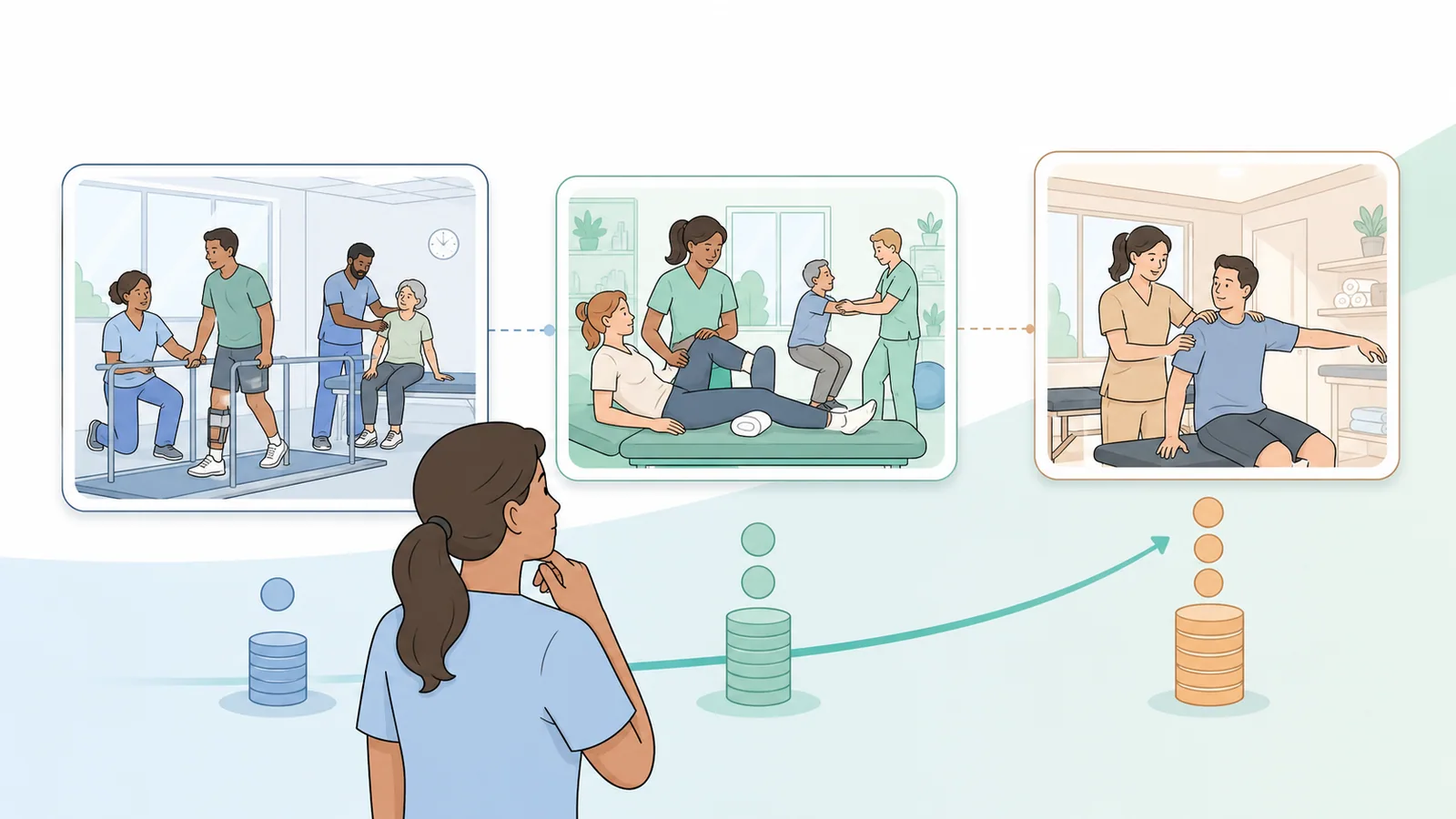
What physiotherapists actually earn in the NHS and private sector, with the numbers you need to plan your career.
Most salary pages give you a number and leave you to guess whether it is real. This one breaks down Agenda for Change bands, high-cost area supplements, private sector rates, and locum pay, so you can compare like with like.
NHS physiotherapist salary by band
The NHS pays physiotherapists on Agenda for Change bands, with incremental rises each year until you hit the top of your band. These are the April 2026 figures for England.
Band 5: Newly qualified physiotherapist £32,073 to £39,043
You start here after graduating and registering with the HCPC. Most Band 5 posts are rotational, meaning you move through different specialisms every few months to build breadth. Increments come yearly until you reach the top of the band.
Band 6: Specialist physiotherapist £39,959 to £48,117
Once you have two to four years of experience and a clear specialism, you can apply for Band 6 roles. These are the MSK clinicians, the neuro specialists, the respiratory physios who have depth in one area. The jump from Band 5 to Band 6 is often the biggest percentage increase of your career.
Band 7: Advanced practitioner or team lead £49,387 to £56,515
Band 7 roles carry clinical leadership, team management, or advanced autonomous practice. First Contact Practitioners in GP surgeries typically sit at Band 7. To reach this level, most physiotherapists spend three to five years in a specialist Band 6 role first.
Band 8a: Consultant physiotherapist £57,528 to £64,750
Consultant roles involve strategic influence, research, education, and complex clinical decision-making. These are the senior-most clinical posts in physiotherapy. Band 8a is where most consultant roles start, with some trusts offering 8b or 8c for regional or national leads.
For the full breakdown of how NHS pay bands work across all roles, see NHS pay bands explained, or run your own numbers in the NHS Pay Calculator.
High-cost area supplements
If you work in or around London, your basic salary gets a boost. The supplements are:
- Inner London: 20 percent of basic pay, between £5,794 and £8,746 depending on your band
- Outer London: 15 percent of basic pay, between £4,870 and £6,137
- Fringe areas: 5 percent of basic pay
These apply automatically based on your trust's location. A Band 6 physiotherapist at the top of the scale in Inner London earns around £56,800 in basic pay before overtime or additional hours.
Private sector physiotherapist pay
Private hospital groups like Bupa and Nuffield typically pay employed physiotherapists in the range of £38,000 to £45,000. Senior or specialist roles can reach £45,000 to £55,000. These figures are directional estimates based on advertised roles; actual offers vary by employer, location, and your negotiation.
The numbers look similar to NHS pay, but the comparison is not straightforward. Private roles rarely match the NHS pension, which is worth roughly 24 percent of salary when you account for employer contributions and defined benefits. They may offer different hours, smaller caseloads, or other perks. We compare the trade-offs in detail in NHS vs private physiotherapist.
Locum and self-employed rates
Locum physiotherapists working through agencies typically earn £30 to £50 per hour, depending on specialism, location, and urgency. MSK and outpatient roles tend to sit at the lower end. Respiratory, ITU, or short-notice cover can command higher rates.
Self-employed physiotherapists running their own clinics set their own prices. Patient-facing private rates often range from £50 to £80 per session, but your take-home depends on overheads, room rental, and how full your diary is. Most self-employed physios build their caseload over years, often while holding a part-time NHS post.
How pay progresses
A typical NHS career might look like this:
- Years one to two: Band 5 rotations, earning £32,073 rising to mid-band
- Years three to five: Band 6 specialist role, earning £39,959 rising toward £48,117
- Years six to ten: Band 7 advanced practitioner or team lead, earning £49,387 rising to £56,515
- Year ten onward: Possible Band 8a consultant role, earning £57,528 or above
These timelines vary. Some clinicians move faster by changing trusts or taking on additional responsibilities. Others stay at Band 6 or Band 7 for decades because the clinical work suits them. Progression is not automatic; you apply for each new band.
For the full picture of how physiotherapy careers develop, see physiotherapist career path.
The pension question
The NHS pension is often undervalued in salary comparisons. Current scheme members (from 2015 onward) accrue benefits at 1/54th of their career average salary each year, revalued with inflation. The employer contribution totals around 24 percent of your salary. When you retire, you receive a guaranteed income for life, index-linked.
Private employers rarely match this. Most offer defined contribution pensions with employer contributions in the range of 3 to 8 percent. The difference compounds over a career. A physiotherapist who spends thirty years in the NHS will typically retire with a pension worth significantly more than their private sector equivalent, even if annual salaries looked similar.
This does not mean private is the wrong choice. It means pension value belongs in the comparison when you are deciding where to work.
FAQ
What is the starting salary for a physiotherapist in the UK?
A newly qualified physiotherapist starts at NHS Band 5, which pays £32,073 to £39,043 as of April 2026. Most new graduates enter at the bottom of this band and receive annual increments. In London, the high-cost area supplement adds between 5 and 20 percent on top.
Do private physiotherapists earn more than NHS?
Not necessarily. Employed private physiotherapists often earn similar or slightly lower base salaries than their NHS equivalents. The NHS pension, worth around 24 percent of salary in employer contributions alone, typically tips the total compensation balance. Private roles may offer other benefits, such as different working patterns or smaller caseloads.
How much do locum physiotherapists earn?
Locum physiotherapists typically earn £30 to £50 per hour through agencies. Rates depend on specialism, location, and how urgently the cover is needed. Short-notice ITU or respiratory shifts tend to pay more than routine outpatient MSK work.
How long does it take to reach Band 7 as a physiotherapist?
Most physiotherapists reach Band 7 after six to ten years of experience. The typical path involves two to four years at Band 5, then four to six years at Band 6, then a successful application for a Band 7 role. Timelines vary depending on available posts, your specialism, and whether you change trusts.
Is physiotherapy a well-paid career?
Physiotherapy offers solid mid-career earnings. A Band 7 physiotherapist earns £49,387 to £56,515 before any London weighting. With the NHS pension factored in, total compensation is competitive with many graduate professions. The ceiling is lower than medicine or senior management, but the route to Band 6 or Band 7 is achievable within a decade of qualifying.
Find your next role
If you are exploring physiotherapy roles, we list current vacancies at physiotherapist jobs. For a broader view of how to enter the profession, start with how to become a physiotherapist.