
The Best Entry Level Roles in UK Health and Life Sciences
Discover the top entry level roles across UK health and life sciences and learn how to start your career in the sector even without technical or clinical experience.

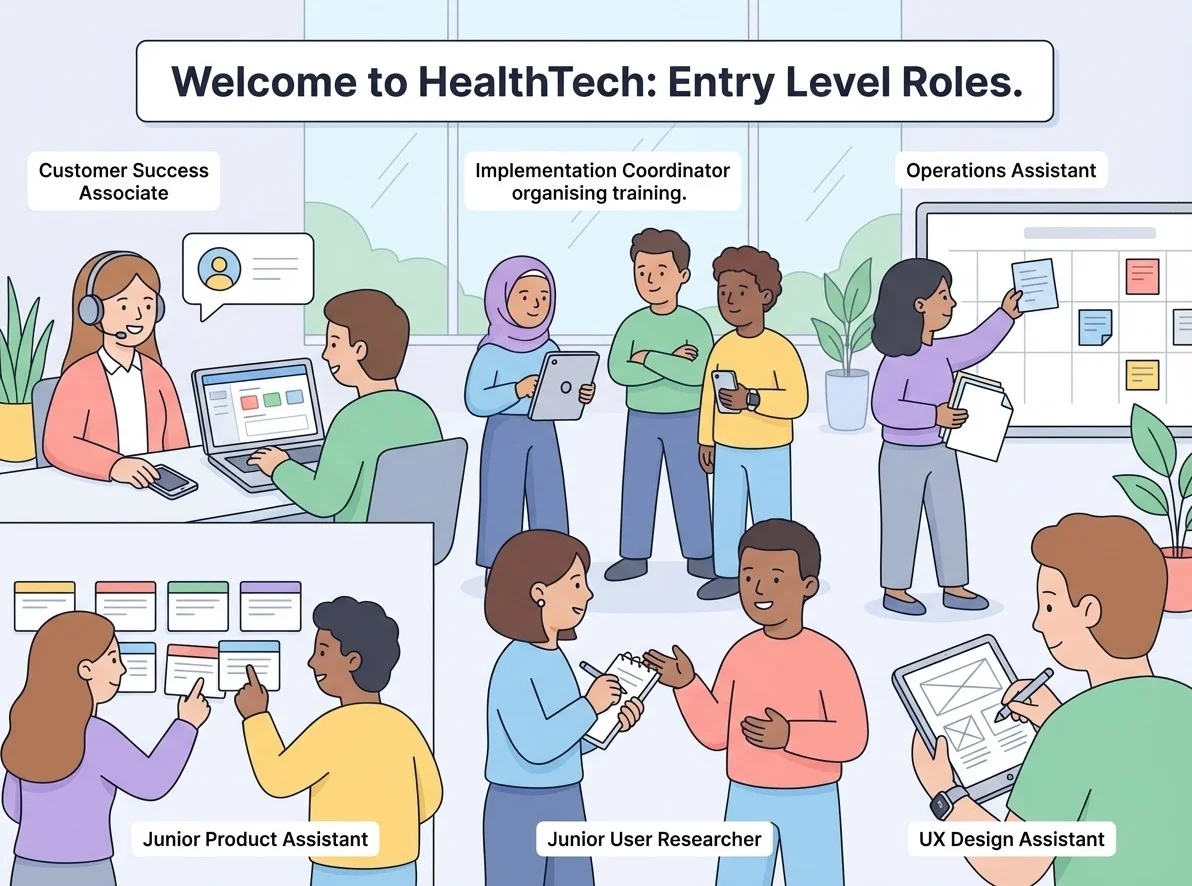
If you are looking to break into health and life sciences but are not sure where to start, you are not alone. The sector can feel like it is full of complex systems, emerging technologies and specialist skills. The truth is far more encouraging. Many of the most impactful roles do not require years of experience, clinical training or coding knowledge. They simply require curiosity, empathy, problem solving and a genuine interest in helping improve people’s health.
UK health and life sciences is growing quickly, across digital health, medical devices, diagnostics, pharma, biotech and the contract research organisations (CROs) that support them. Companies are looking for fresh talent. If you are early in your career or coming from a completely different background, there are plenty of entry level roles where you can thrive.
Let us explore the best places to begin.
Customer Success Associate
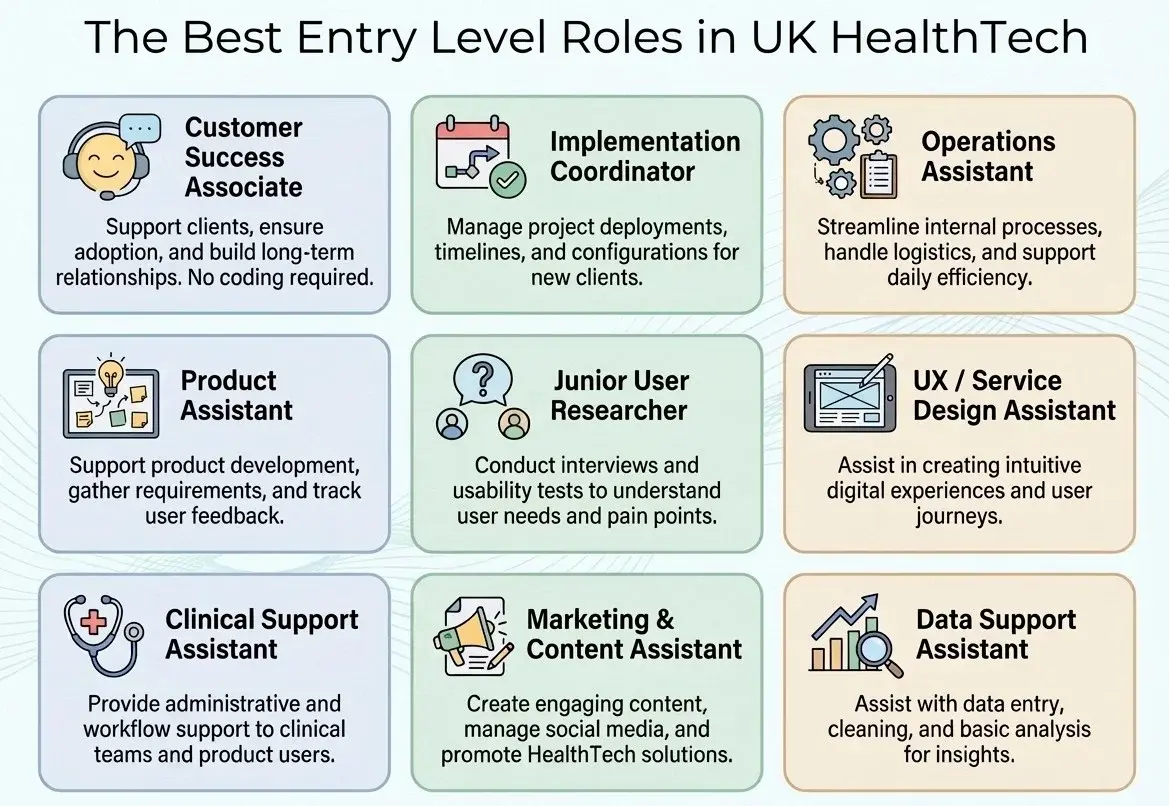
Customer success is one of the most welcoming entry routes into the sector. You support users, answer questions, help them get the most from the product and ensure they feel supported along the way.
Here, your customers may be clinicians, care teams, lab staff or members of the public using a digital health tool. This role gives you a front row seat to the real problems people face and how the product helps solve them.
If you enjoy communicating, helping people and building relationships, this is a brilliant place to start.
Implementation Coordinator
Implementation teams help bring new technology into real world settings, whether that is a hospital, a private clinic, or a diagnostics lab. As an entry level coordinator, you might support onboarding, plan training sessions, organise rollouts, collect feedback and ensure everything runs smoothly.
It is perfect for people who are organised, proactive and comfortable juggling tasks. You learn how healthcare environments work, how products are adopted and how teams collaborate.
You do not need technical skills. You need to be reliable, calm and good at supporting others.
Operations Assistant
Operations roles keep companies running. You might help with internal processes, scheduling, data entry, communication, documentation or product setup. These roles are often varied, which means you get exposure to many teams across the business.
People from admin, customer service, hospitality or retail backgrounds often transition easily into operations. If you enjoy structure and improving processes, this is an ideal path.
Product Assistant or Junior Product Coordinator
Product roles are incredibly popular, and for good reason. They sit at the heart of the company, shaping the direction of the product and helping teams make user centred decisions.
Entry level product roles involve tasks such as writing user stories, gathering feedback, supporting research, organising meetings and helping coordinate priorities. You do not need to code. You need curiosity, communication skills and a passion for solving problems.
This is one of the fastest ways to grow into a product management career.
Junior User Researcher
User research is all about understanding how people experience health and care. As a junior researcher, you might help plan interviews, take notes, observe usability tests or organise participant recruitment.
If you enjoy speaking to people, listening deeply and uncovering insights that help shape better solutions, research is a great entry point. Many researchers come from psychology, healthcare, customer service or academic backgrounds.
UX Assistant or Service Design Assistant
Design roles focus on the user experience. Entry level designers often support with simple wireframes, journey mapping, content layout, accessibility checks and research activities. You do not need coding skills, but you should enjoy creativity and problem solving.
Design in this sector sits at the intersection of empathy and clarity. If you have a creative eye and want to improve how people navigate digital tools, this path could be perfect.
Clinical Support or Pathway Assistant
If you come from a clinical or health background, even at an early stage, you can bring huge value. Companies often hire entry level clinical support staff to help with pathway design, data checks, documentation or clinical research.
You might be a newly qualified clinician, a student with experience on placement or someone who has worked in care settings. Your insight helps ensure products are safe, relevant and grounded in real life care.
Clinical Trials or Regulatory Assistant
Pharma, biotech, diagnostics and CRO employers run on evidence and compliance, and both areas have genuine entry points. A trials assistant or clinical research coordinator helps keep studies organised: tracking documents, supporting sites and maintaining records. A junior regulatory or quality assistant helps prepare submissions and keep technical files in order.
These roles suit people who are meticulous, calm under detail and comfortable with structure. They are also a strong foundation for a long career in clinical operations, regulatory affairs or medical affairs.
Marketing or Content Assistant
Companies across the sector need strong communicators. Entry level marketing roles involve writing content, managing social media, supporting campaigns and helping tell the story behind the product.
You do not need a technical background. You need creativity, clarity and the ability to communicate complex ideas simply. If you enjoy writing, storytelling or branding, this is a great place to start.
Data Support Assistant
This is a gentle entry point for people who enjoy numbers but do not have advanced technical skills. You might manage spreadsheets, review dashboards, track performance or prepare simple reports. Many people grow from here into data roles as they build confidence.
If you are curious about data and enjoy problem solving, this gives you a solid foundation.
Why These Roles Are Such Strong Entry Points
Companies in this sector value diversity of thought. They know the best ideas often come from people who bring fresh perspectives. They also know that lived experience, communication, empathy and problem solving are essential to building safe and effective products.
Entry level roles give you real exposure to how the sector works, how teams collaborate and how products grow. They also open the door to many long term career paths across design, product, operations, data, clinical work, regulatory affairs or leadership.
You do not need to have all the answers. You just need passion, curiosity and the willingness to learn.
My Thoughts
UK health and life sciences is full of opportunities for people at the start of their careers. Whether you want to support customers, organise projects, dive into user research or explore product roles, there is a path for you. Every entry role helps shape better care for real people, and that is the beauty of this sector.
If you are motivated by purpose, enjoy solving problems and want to be part of a field that is growing quickly, this is an exciting place to begin. The best time to start is now.