
Physiotherapist Qualifications and Registration UK
To call yourself a physiotherapist in the UK, you need HCPC registration, and that process starts well before you finish training.

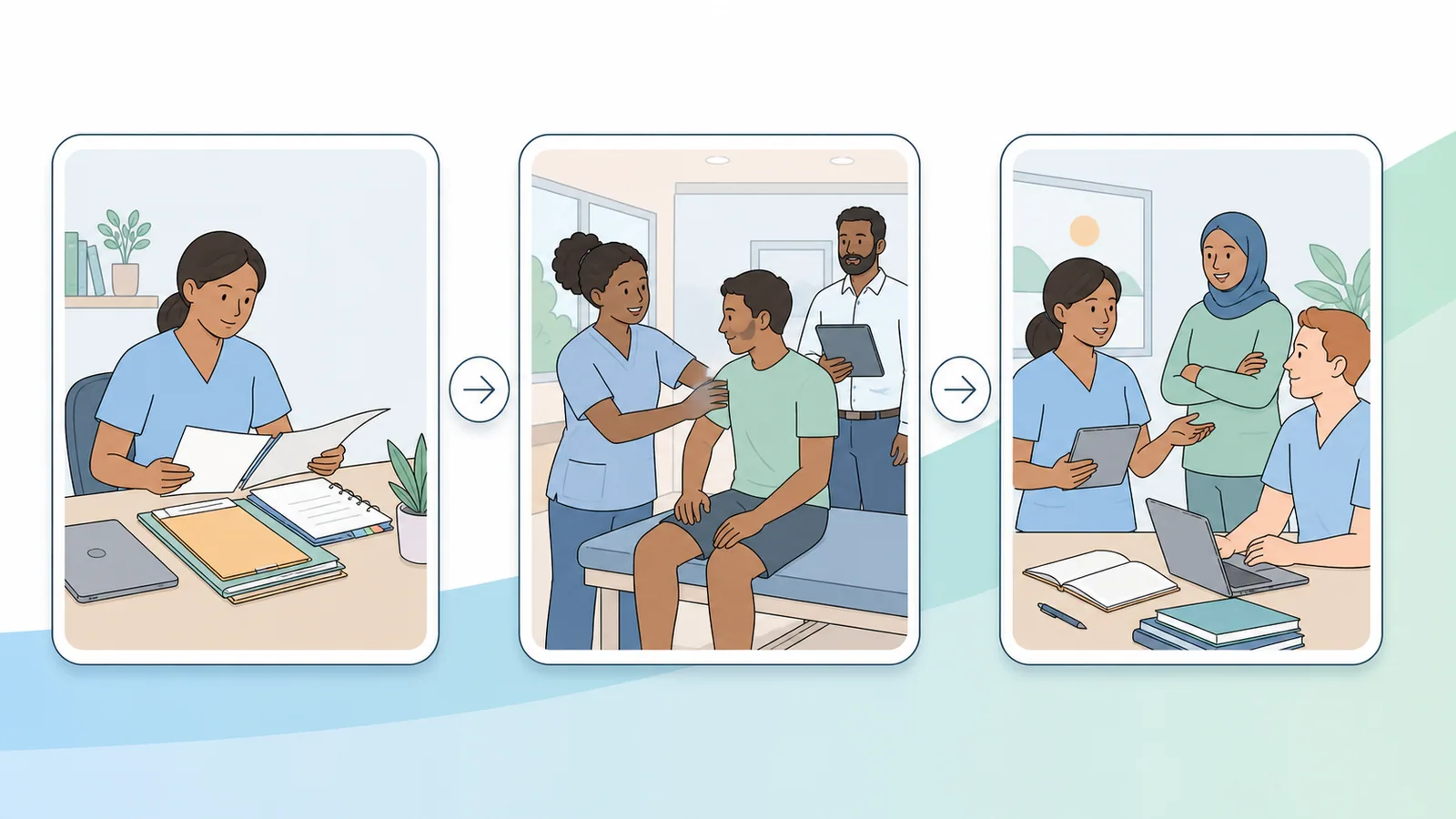
To call yourself a physiotherapist in the UK, you need HCPC registration, and that process starts well before you finish training.
The protected title
"Physiotherapist" is a protected title in the UK, as is "physical therapist". Use either without HCPC registration and you commit a criminal offence. Fines run into several thousand pounds.
This matters. It shapes everything in the profession. Without registration, you cannot work, you cannot be insured, and employers cannot hire you.
The Health and Care Professions Council (HCPC) is the regulator, holding the register, setting the standards, and handling fitness-to-practise cases when things go wrong. Your relationship with the HCPC runs for as long as you practise.
What qualifications you need
You need an approved qualification, which usually means a BSc in Physiotherapy from an HCPC-validated programme, though a few universities offer a two-year MSc for graduates from related fields. The degree apprenticeship route, four years leading to a BSc, also counts.
"Approved" is the key word. If your programme is on the HCPC list, your university handles most registration paperwork before you graduate, making the transition straightforward. If not, or if you trained abroad, the process takes longer.
Entry requirements for the degree route typically include A-levels at ABB to BBB with biology, plus GCSEs in English, Maths, and Science at grade C/4 or above.
The apprenticeship route has similar academic standards.
Details on both routes: physiotherapy degree requirements and the physiotherapist apprenticeship guide.
Initial registration with the HCPC
When you finish an approved UK programme, your university will have already submitted your details. You complete an online application, pay the fee, provide ID, and declare any health conditions or criminal history.
Most new graduates are registered within two weeks.
Trained outside the UK? Longer process. You apply through the international route with verified transcripts and proof of English competence, and should expect several months before you hear back.
Once registered, your name appears on the public register, which anyone can check. Employers will, and they will not offer you a contract until registration is confirmed.
The annual renewal
HCPC registration runs on a two-year cycle, with fees currently at £123 per year (collected as £247 every two years at renewal), and you will get reminders a few months before your deadline. New UK graduates pay a reduced rate of £62 per year for their first two professional years.
Miss it, and you drop off the register. No grace period.
Renewal is not automatic. You confirm that you still meet the HCPC's standards of conduct, performance, and ethics, and you confirm ongoing CPD. The HCPC audits a random sample each cycle, and if you are selected, you submit evidence of your CPD activity.
CPD: what counts and what is required
The HCPC does not specify a set number of CPD hours, requiring instead that you maintain and develop knowledge and skills relevant to your practice. Reflection and application matter more than box-ticking.
What counts? Formal courses and conferences. In-service training and peer observation. Mentoring, reading research, reflective practice. The key is explaining how the activity improved your work.
If audited, you submit a profile covering your activities, your reflections on them, and how they changed your practice. Weak submissions lead to scrutiny, and repeated failure can mean conditions on your registration or removal from the register entirely.
The Chartered Society of Physiotherapy offers templates for CPD planning.
CSP membership: useful, separate from HCPC
The Chartered Society of Physiotherapy (CSP) is the professional body for UK physiotherapists. Unlike HCPC registration, membership is voluntary.
Most physiotherapists join anyway.
Why? The CSP provides professional indemnity insurance, which is required for private practice and increasingly expected in NHS roles, along with access to the Physiotherapy journal, CPD resources, career guidance, and legal advice. The CSP also acts as a trade union, representing members in workplace disputes.
Fees run on a sliding scale based on income. Students pay a reduced rate of around £49 per year.
The letters "MCSP" after your name carry weight with employers, though they are not a legal requirement.
What happens if your registration lapses
Let your HCPC registration lapse, and you cannot practise, cannot use the protected title, and cannot be employed in a registered role. Your employer will likely suspend or terminate your contract.
Act fast. Apply promptly, pay outstanding fees, and show you still meet the standards, and restoration usually takes a few months. Longer gaps raise more questions, and the HCPC may require evidence of recent CPD or a return-to-practice programme.
Worth knowing if you are considering a career break.
Overseas-qualified physiotherapists
Trained outside the UK? Apply to the HCPC through the international route. You need certified copies of your qualification, transcripts, and proof of English competence. That usually means IELTS Academic at 7.0 overall, no section below 6.5.
The HCPC assesses whether your training matches UK standards, and if there are gaps, you may need to complete additional assessments or supervised practice. Processing takes several months.
Once registered, you have the same status as UK-trained physiotherapists. Same jobs, same process: physiotherapist jobs.
FAQ
Is HCPC registration the same as being chartered?
No. HCPC registration is the legal requirement to practise, while being chartered (MCSP) means you are a member of the Chartered Society of Physiotherapy. You need the first to work. The second is recommended.
How long does initial registration take?
Depends. For UK graduates, usually one to two weeks after completing your online application. For international applicants, it can take several months depending on the complexity of your case.
What does CPD actually involve?
Anything that maintains or develops your knowledge and skills. Formal courses count. Peer discussions, reading research, reflective writing, all count. The HCPC cares more about what you learned and how you applied it than about hours logged.
Can I work while waiting for registration?
No. You cannot use the title "physiotherapist" or work in a registered physiotherapy role until your name appears on the HCPC register.
Some trusts hire rehabilitation assistants while candidates await registration. Different role, different pay.
What if I want to return after a career break?
It depends. If your registration has lapsed for under two years and you can demonstrate ongoing CPD, restoration is usually straightforward, but longer gaps may require a return-to-practice programme, and the CSP and HCPC both publish guidance on returning to the profession.
For more on how qualifications fit into the bigger picture, read our guide on how to become a physiotherapist. If you are weighing up settings, see our comparison of NHS versus private physiotherapy work. For salary expectations at each level, start with the physiotherapist salary guide or use the NHS Pay Calculator to estimate your take-home.